



 Sep 08,2026
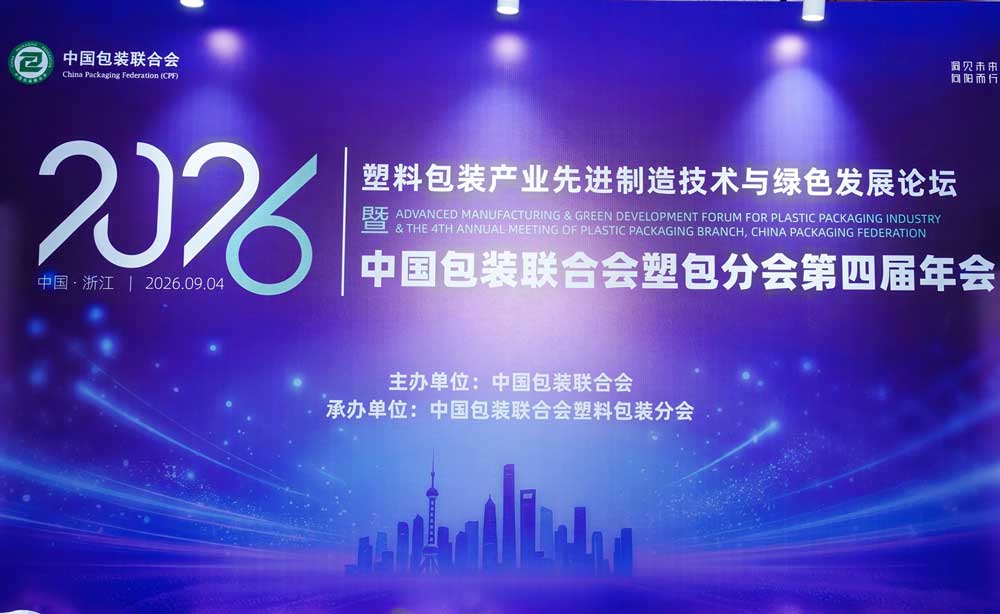
On September 4, 2026, the 2026 Forum on Advanced Manufacturing Technology and Green Development in the Plastic Packaging Industry & the 4th Annual Meeting of the Plastic Packaging Branch of the China Packaging Federation was held in Zhejiang, China. Hosted by the China Packaging Federation and organized by its Plastic Packaging Branch, the event brought together industry experts, research institutions, and leading companies from across the plastic packaging value chain.
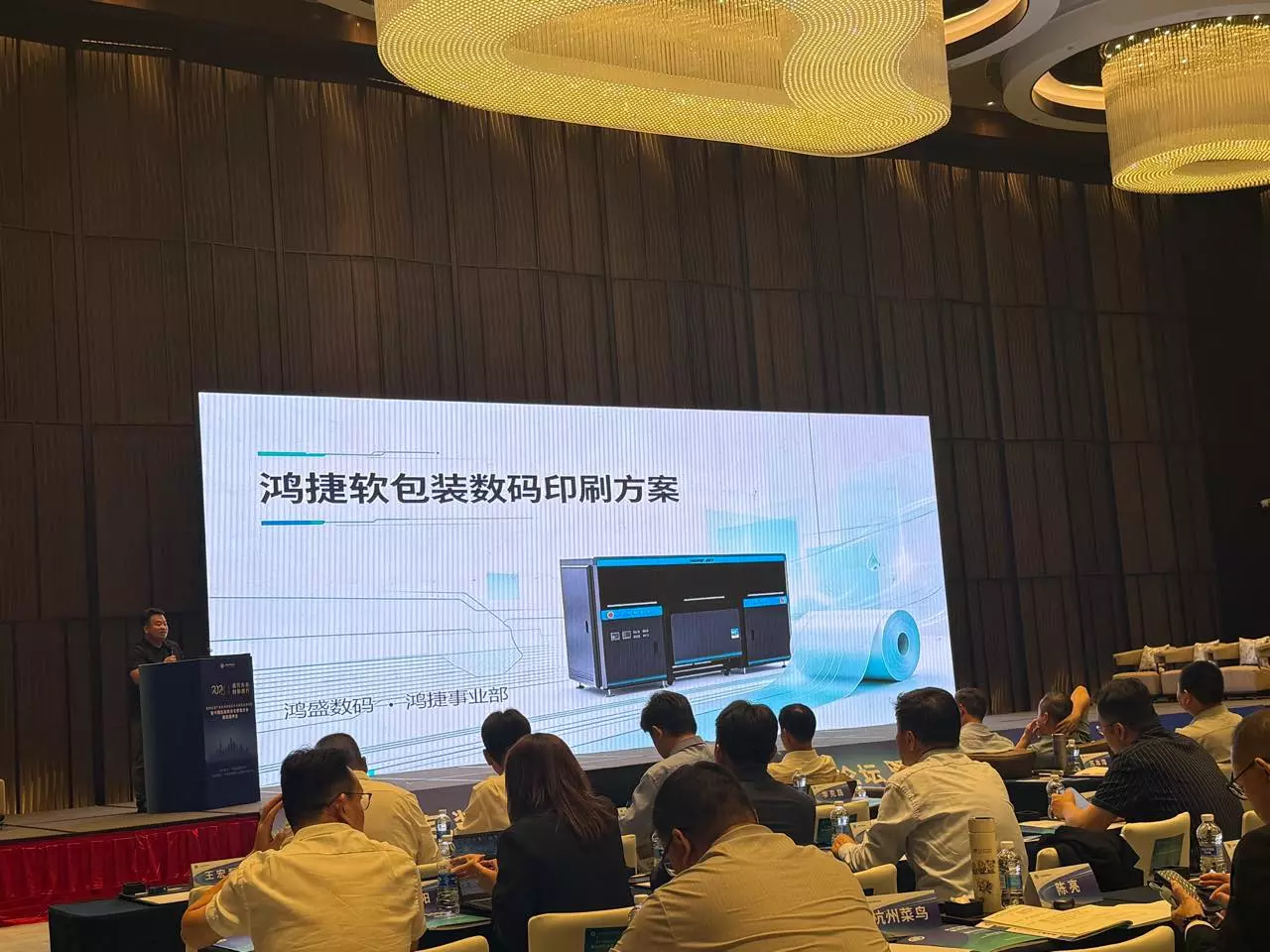
Mr. Li, Sales Director of the Hong-Jet Business Division at Zhengzhou HONGSAM Technology Co., Ltd., was invited to attend the event and deliver a keynote presentation titled “Water-Based flexible Packaging Digital Printing Solutions” during the main forum. He shared insights with industry peers on the transition toward greener and more flexible manufacturing in the plastic packaging industry.
1. Addressing Four Core Pain Points of Traditional Printing Processes
Mr. Li began his presentation by examining the four major pain points of traditional printing processes, with a particular focus on two long-standing challenges: cost and production efficiency.
-
High Costs for Small Orders, Making Profitability Difficult
Traditional processes such as gravure printing require upfront investments in plate-making and machine setup. The smaller the order volume, the greater the proportion of setup costs and production waste.
For example, for a small-batch order of approximately 3,000 m², make-ready waste can often reach 8%–12%. The combined impact of upfront costs and hidden production losses continues to squeeze profit margins, forcing some companies to turn down small orders and potentially miss long-tail opportunities in the growing customized and fragmented packaging market.
-
Long Lead Times and Slow Market Response
Traditional production typically requires 1–2 days for plate-making and preparation, followed by another 1–3 days of production. In practice, overall delivery cycles can commonly extend to 7–15 days.
This makes it difficult to respond quickly to short-lead-time orders generated by e-commerce livestreaming, community group buying, seasonal promotions, and other fast-moving consumer scenarios. Traditional supply and production processes therefore face increasing challenges in meeting the market's demand for flexibility and rapid response.
After analyzing these challenges, Mr. Li further discussed environmental compliance and flexible production. He pointed out that the cost and efficiency challenges of traditional gravure printing are no longer simply problems associated with individual production steps. Instead, they have become systemic challenges for packaging printing companies, making transformation and upgrading increasingly important.
2. The Value Proposition of Water-Based Flexible Packaging Digital Printing
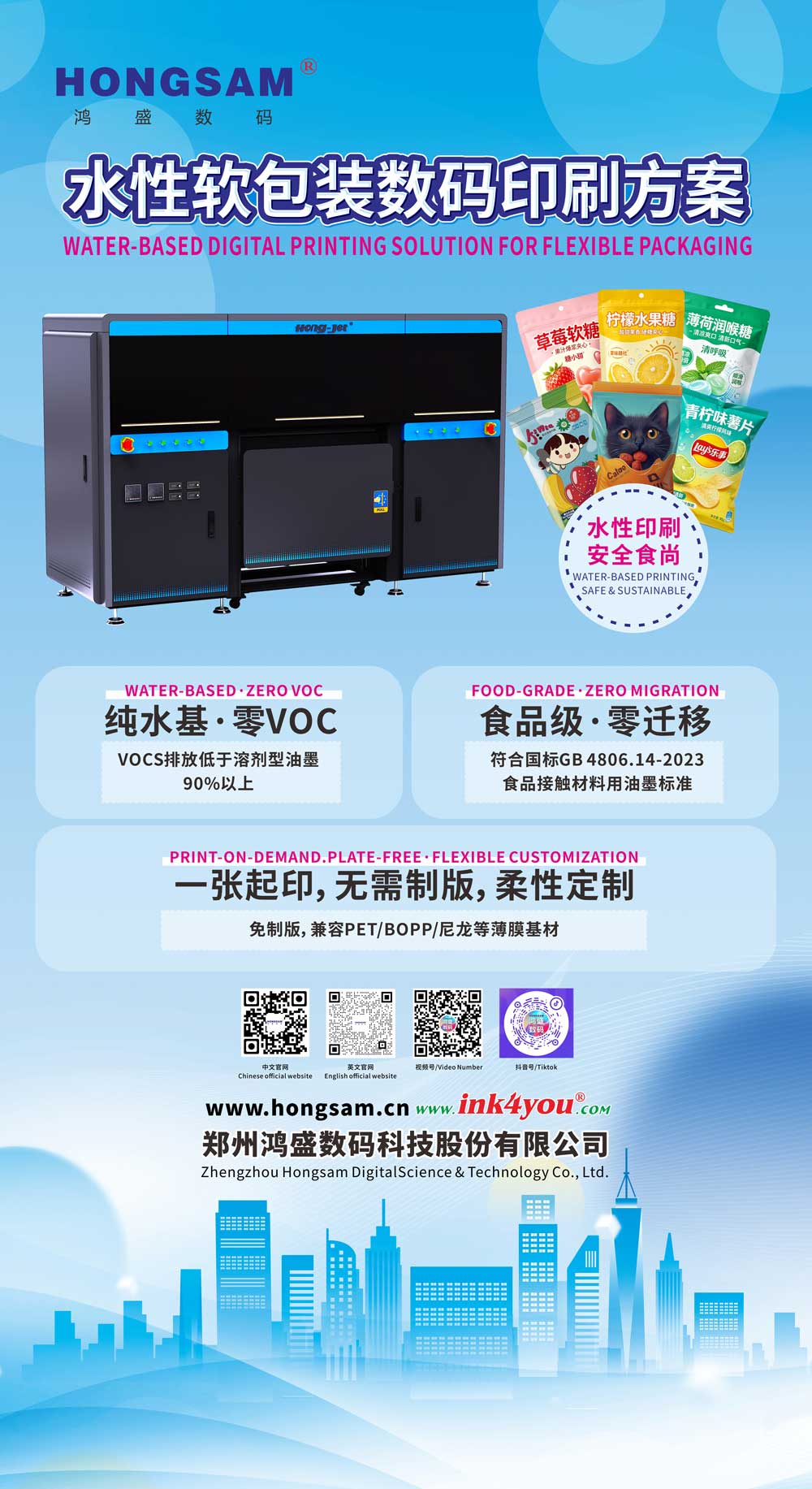
To address these industry challenges, HONGSAM introduced its Water-Based Flexible Packaging Digital Printing Solution, built around three core value propositions.
-
Pure Water-Based · Zero VOC
The solution uses a pure water-based ink formulation. Compared with traditional solvent-based inks, VOC emissions can be reduced by more than 90%, helping reduce VOC emissions at the source while creating a cleaner production environment and supporting employee health and safety.
-
Food-Contact Applications · Zero Migration
The solution is designed in accordance with the requirements of China's national standard GB 4806.14-2023, Inks for Food Contact Materials and Products, enabling zero-migration performance for food-contact packaging applications.
This provides soft packaging manufacturers with an ink solution designed to meet stringent food-safety requirements and helps ensure that packaging products can withstand regulatory scrutiny.
-
Print from a Single Piece · No Plate-Making Required
For a wide range of film substrates, including PET, BOPP, and nylon, the solution eliminates the need for traditional plate-making, enabling on-demand digital printing from a single piece.
By removing the plate-making and minimum-run barriers associated with conventional printing, the solution is well suited to emerging applications such as e-commerce, C2M (Customer-to-Manufacturer), personalized packaging, and small-batch production.
It enables packaging manufacturers to respond more efficiently to small orders and rapidly changing market demands.
3. Building a Greener and More Flexible Soft Packaging Industry
Water-based ink technology and environmentally responsible printing have been a key focus of HONGSAM's technology development for many years.
Going forward, HONGSAM will continue to increase its R&D investment in key areas including water-based ink formulations, digital printhead compatibility, and intelligent prepress workflows.
Together with upstream and downstream partners across the packaging industry, HONGSAM aims to accelerate the transformation of plastic packaging toward a more sustainable, flexible, and digitally enabled manufacturing model.
The forum provided a valuable platform for industry professionals to exchange ideas on advanced manufacturing and green development. HONGSAM's Hong-Jet® Water-Based Flexible Packaging Digital Printing Solution attracted considerable attention and discussion, contributing new ideas and practical solutions to the industry's transition toward advanced manufacturing and green development.
Frequently Asked Questions About Water-Based Flexible Packaging Digital Printing
What is water-based flexible packaging digital printing?
Water-based flexible packaging digital printing is a digital printing process that uses water-based inks to print directly onto flexible packaging films and other soft packaging substrates. Unlike conventional gravure printing, it does not require traditional plate-making, making it suitable for small-batch, customized, and on-demand packaging production.
What are the advantages of water-based digital printing for flexible packaging?
Water-based digital printing can reduce the need for plate-making, support small-batch and on-demand production, shorten setup and delivery times, and reduce VOC emissions compared with traditional solvent-based printing processes. It is particularly suitable for customized packaging, short production runs, and rapidly changing market requirements.
Can water-based digital printing be used for small-batch flexible packaging?
Yes. One of the key advantages of digital printing for flexible packaging is its ability to produce small quantities without the traditional plate-making costs associated with gravure printing. This makes the technology suitable for small-batch orders, product testing, personalized packaging, and short-lead-time production.
Which flexible packaging substrates can be used with the Hong-Jet® solution?
The Hong-Jet® Water-Based Soft Packaging Digital Printing Solution can be used with a range of film substrates, including PET, BOPP, and PVC. Actual substrate compatibility depends on the specific printing system, ink formulation, film surface treatment, and application requirements.
Does water-based packaging ink reduce VOC emissions?
Water-based inks generally have significantly lower VOC emissions than conventional solvent-based inks. The Hong-Jet® solution uses a pure water-based ink formulation, with VOC emissions that can be reduced by more than 90% compared with traditional solvent-based inks under the stated application conditions.
Does water-based soft packaging digital printing require printing plates?
No. Digital printing eliminates the need for traditional printing plates. This allows packaging manufacturers to print on demand and produce small quantities without the plate-making process required by conventional gravure printing.
Is water-based digital printing suitable for food-contact packaging?
Water-based digital printing can be developed for food-contact packaging applications when the complete ink, printing process, substrate, and finished packaging structure meet the applicable regulatory and migration requirements. HONGSAM's Hong-Jet® solution is designed in accordance with the requirements of China's GB 4806.14-2023 standard for inks used with food-contact materials and products.
Why is digital printing suitable for personalized flexible packaging?
Digital printing does not require a new printing plate for every design, making it easier to produce variable designs, customized packaging, prototypes, and short production runs. This flexibility makes digital printing particularly suitable for e-commerce, C2M, personalized packaging, and other rapidly changing applications.
What is the Hong-Jet® Water-Based Soft Packaging Digital Printing Solution?
Hong-Jet® is HONGSAM's water-based digital printing solution for soft and flexible packaging applications. The solution integrates water-based ink technology with digital printing equipment and printing processes to support plate-free, small-batch, and on-demand packaging production.